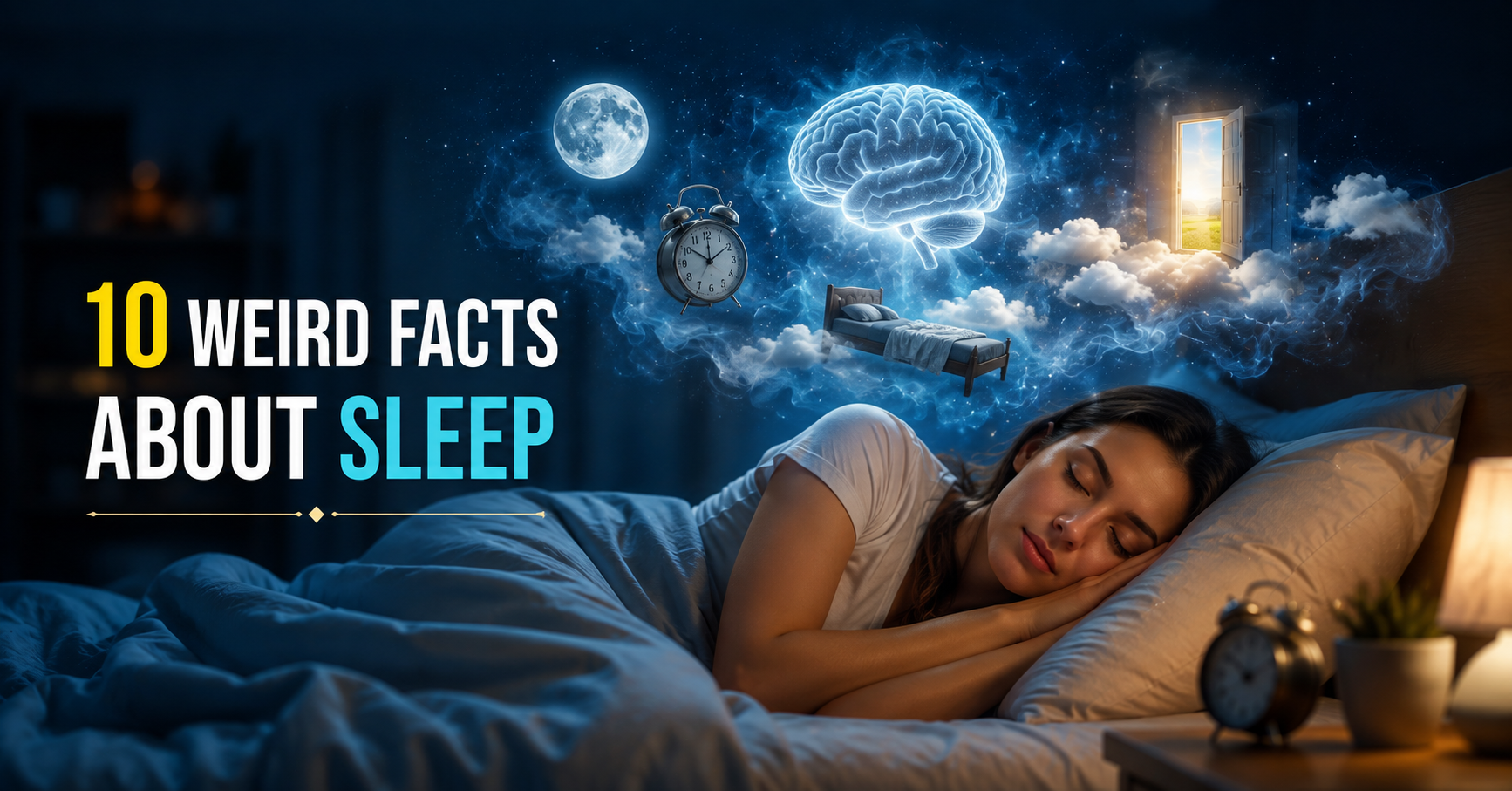
Sleep looks quiet from the outside, but the brain and body move through changing processes all night. That makes sleep easy to oversimplify. This guide focuses on weird facts about sleep that are supported by reliable sleep science, not viral claims about a perfect number of hours or magical hacks. People’s sleep needs and experiences vary, but the basic biology is fascinating. Here are 10 surprising sleep facts with helpful context.
1. Your Brain Stays Active While You Sleep

Sleep is not simply a switch-off period. Brain activity changes by stage, and sleep studies measure different patterns during non-REM and REM sleep. REM activity can look similar to waking activity, while deep non-REM sleep shows slower waves. The brain is still coordinating important processes, even though you are less aware of the outside world.
2. REM Sleep Is Strongly Linked With Vivid Dreaming

Vivid dreams are especially common during REM sleep, when brain activity is high and the body’s large muscles are normally relaxed. But REM is not the only time dreams can happen. Dreaming can also occur during non-REM sleep. Remembering a dream often depends on when you wake, so forgetting one does not prove that you did not dream.
3. Your Body Temperature Drops During Sleep

Core body temperature usually falls as part of the sleep-wake cycle. In non-REM sleep, body temperature lowers along with heart rate and breathing. During REM sleep, temperature regulation is less tightly controlled. This is normal sleep biology, not a reason to chase an exact bedroom temperature or copy someone else’s routine.
4. Sleep Helps Memory and Learning

Sleep supports learning and the formation of long-term memories. That does not mean it records every detail from the day. Instead, sleep seems to help the brain work with information already learned. Good study habits still matter, but a consistent chance to sleep is part of giving new information a better opportunity to stick.
5. Sleep Paralysis Can Happen While Waking or Falling Asleep

Sleep paralysis can occur during the transition into sleep or as a person wakes up. Someone may feel aware but briefly be unable to move or speak. It is linked to REM-related muscle relaxation carrying over into wakefulness. Episodes can feel scary but are not paranormal. Repeated episodes or concerns about sleep are worth discussing with a health professional.
6. You Cycle Through Different Sleep Stages

Over a night, sleep moves through non-REM stages and REM sleep more than once. The stages do not stay the same length: deep sleep is often more prominent earlier, while REM periods tend to grow later. Cycle length varies. Sleep science describes a changing pattern, not a perfectly timed machine.
7. Snoring Is Common, but It Can Sometimes Signal a Problem

Snoring is common and does not, by itself, diagnose obstructive sleep apnea. Still, loud snoring, gasping, or observed breathing pauses can sometimes be signs worth raising with a health professional. A clinician can consider the full picture and decide whether testing is appropriate. This is one of the sleep facts where context matters more than a single symptom.
8. Sleep Loss Can Affect Attention and Reaction Time

After too little or disrupted sleep, people may notice that it is harder to focus, react quickly, or make careful decisions. CDC guidance on fatigue notes that it can slow reaction time and reduce concentration. Effects vary, so one rough night does not tell the whole story. It does show why alertness matters for driving, work, and other safety-sensitive activities.
9. Sleepwalking Usually Happens During Deep Non-REM Sleep

Sleepwalking is a parasomnia. It most often occurs during deep non-REM sleep, usually earlier in the night. A person may sit up, walk, or do simple activities while still asleep and remember little afterward. It should not be sensationalized, but practical safety matters. Frequent episodes, injuries, or concerning behavior deserve medical advice.
10. You Can Dream More Than Once Per Night

Because sleep cycles repeat, people can have dream experiences more than once. REM periods often lengthen later, and dreams may also occur in non-REM sleep. Most dreams fade quickly unless you wake near them, so recall is uneven. Dreams can feel meaningful, but sleep science does not treat them as reliable messages or predictions.
Conclusion
These weird facts about sleep point to the same big idea: sleep is an active biological process that supports brain and body function. It is not one simple block of rest, and there is no universal rule that fits every person or every night. Sleep needs also vary with age, health, and circumstances. Rather than chasing exaggerated sleep hacks, it is more useful to understand the patterns, notice persistent concerns, and seek qualified advice when sleep problems affect daily life.
Keep Exploring
For related reading, see 8 Everyday Habits That Can Hurt Your Brain Health, 10 Strange Facts About the Human Body You Won't Believe, and 7 Psychological Tricks That Often Work in Everyday Conversations.
Sources
- National Institute of Child Health and Human Development — What happens during sleep?
- https://www.nichd.nih.gov/health/topics/sleep/conditioninfo/what-happens
- National Heart, Lung, and Blood Institute — How sleep works: sleep phases and stages
- https://www.nhlbi.nih.gov/health/sleep/stages-of-sleep
- National Heart, Lung, and Blood Institute — How sleep works: why sleep is important
- https://www.nhlbi.nih.gov/health/sleep/why-sleep-important
- MedlinePlus Medical Encyclopedia — Sleep paralysis
- https://medlineplus.gov/ency/article/000801.htm
- National Heart, Lung, and Blood Institute — Sleep apnea: what is sleep apnea?
- https://www.nhlbi.nih.gov/health/sleep-apnea
- Centers for Disease Control and Prevention, NIOSH — Fatigue and work
- https://www.cdc.gov/niosh/fatigue/about/index.html
- MedlinePlus Medical Encyclopedia — Sleepwalking
- https://medlineplus.gov/ency/article/000808.htm