Science has explained much about the world, from the motion of planets to the code inside our cells. Yet some of the most interesting things science still can't explain are not blank spots on a map. They are questions with strong evidence, useful theories, and pieces missing. The mysteries science can't explain completely are an invitation to test ideas, not a reason to abandon evidence. Here are 10 unanswered scientific questions researchers are still studying.
1. Consciousness

Brain research can connect thoughts, feelings, and actions to activity in neural networks. What remains unsettled is how that physical activity becomes a first-person experience: seeing red, tasting coffee, or being yourself. Scientists debate models of consciousness and test them with brain imaging and behavior studies. This is an open question, not a claim that the brain is unknowable.
2. Why We Dream

Scientists can measure sleep stages, brain activity, and dreams that occur during REM sleep. But there is no single accepted explanation for why humans dream. Dreams may help with memory, emotion, learning, or simply reflect the brain’s overnight activity. Those ideas are being tested. For more on sleep, see 10 Weird Facts About Sleep You Probably Didn't Know.
3. Dark Matter

Dark matter is a partly understood mystery. Its presence is strongly supported by galaxy motions and gravitational lensing, even though it does not give off or reflect light. Researchers do not yet know what dark matter is made of. Several particle candidates have been proposed, but none has been confirmed, so its exact nature remains open.
4. Dark Energy

Measurements show that the universe’s expansion is accelerating. Scientists use the name “dark energy” for whatever is responsible, but the name is not an explanation. It could involve the energy of empty space, a new field, or a gap in today’s theory of gravity. Observations have narrowed possibilities, yet researchers still do not know what dark energy actually is.
5. How Life First Began

Evolution explains how living populations change after life already exists. A separate question is how chemistry on early Earth first produced systems able to copy themselves, use energy, and evolve. Researchers study possible ingredients, environments, and chemical pathways, including oceans, minerals, and simple organic molecules. Abiogenesis has promising experiments and hypotheses, but no complete, agreed account of the first living systems.
6. Why We Sleep

Scientists know a great deal about sleep. It supports attention and memory, helps regulate metabolism, and is tied to physical and brain health. Sleep is also an active, organized process, not a time when the brain simply switches off. The larger puzzle is why sleep became biologically necessary despite its risks. Researchers are still working out how its many benefits fit together.
7. The Full Complexity of the Human Brain

Researchers can map circuits, identify cell types, and measure signals across the brain. Even so, they are still piecing together how memories are stored, how networks coordinate, and how complex experiences emerge. Progress is fast, but a detailed parts list is not a full explanation of the system. Our 10 Strange Facts About the Human Body You Won't Believe explores more of that biology.
8. Fast Radio Bursts

Fast radio bursts are extremely brief flashes of radio waves arriving from far beyond our galaxy. Astronomers have linked some repeating bursts to highly magnetic neutron stars called magnetars, which is major progress. Still, bursts do not all behave alike, and scientists are studying whether several kinds of sources or mechanisms are involved. The mystery is more specific now, but it is not finished.
9. The Deep Ocean

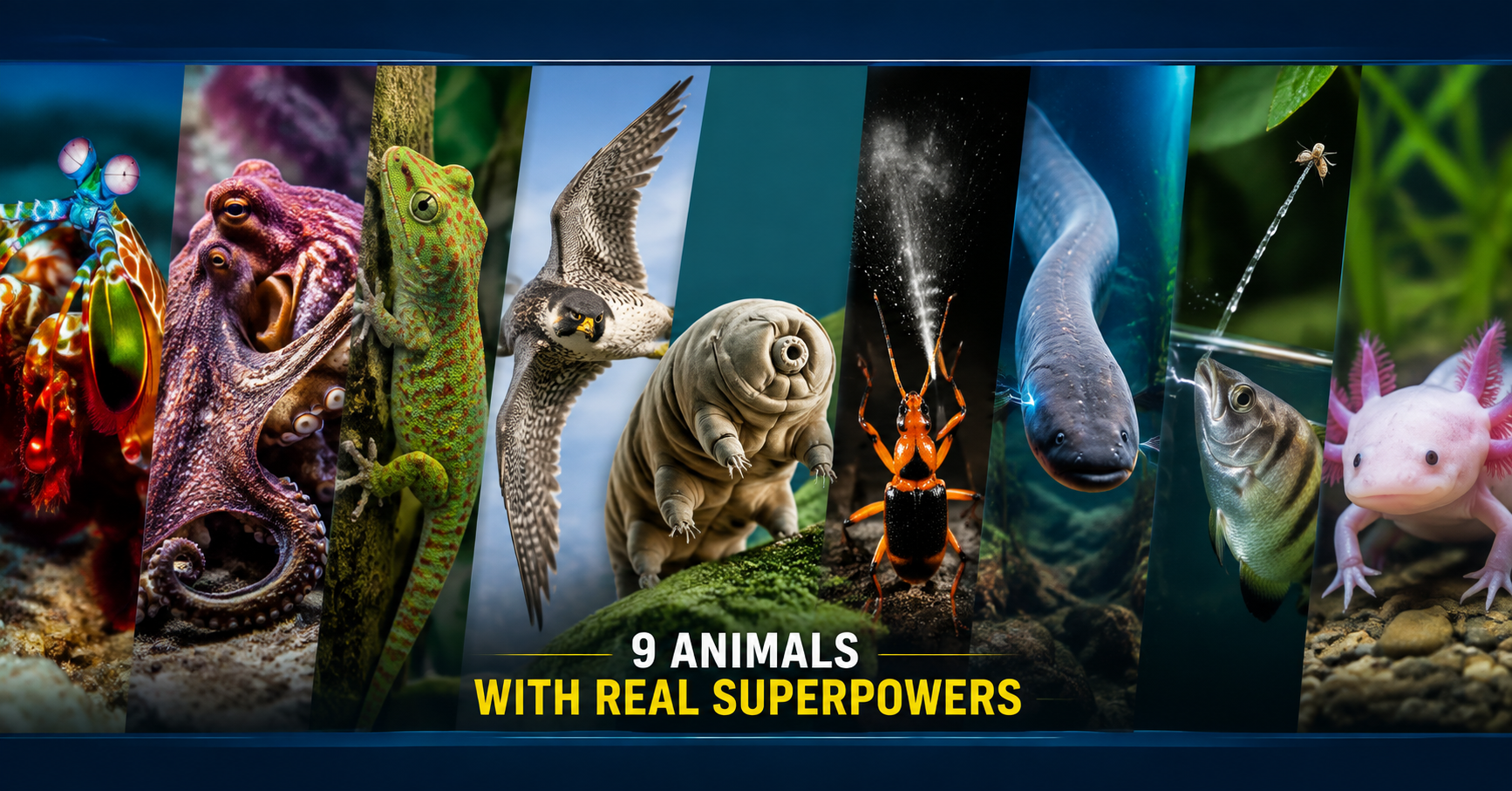
The deep ocean is not an empty unknown, and scientists do not need the claim that “95% of the ocean is unexplored” to make the point. Satellites give broad seafloor maps, but ships and submersibles provide observations in limited places. Large areas remain poorly observed, and expeditions find new species, habitats, and processes. Those adaptations make 9 Animals With Real Superpowers That Seem Impossible worth a look.
10. Why Matter Dominates Antimatter

Physics says matter and antimatter should have been created in nearly equal amounts in the universe. If they had stayed balanced, they would mostly have annihilated. Instead, the observable universe is dominated by matter. Experiments have found differences in how some particles and antiparticles behave, but the known differences do not fully explain the imbalance. Finding the missing piece remains a goal in particle physics.
Conclusion
These things science still can't explain are not evidence that anything can be true. In every case, researchers use observations, experiments, and explanations to reduce uncertainty. Some answers may be ordinary; others could change how we understand life, the brain, or the universe. Careful uncertainty is a strength, not a failure. That is the value of unanswered scientific questions: they point to the next test and, sometimes, the next discovery.
Sources
- NASA — Dark Matter
https://science.nasa.gov/dark-matter/ - NASA — What Is Dark Energy? Inside Our Accelerating, Expanding Universe
https://science.nasa.gov/dark-energy/ - NASA — Astrobiology Program Overview
https://science.nasa.gov/astrobiology/program-overview/ - NIH — Information About Sleep
https://www.ncbi.nlm.nih.gov/books/NBK20359/?report=reader - NOAA Ocean Exploration — How Much of the Ocean Has Been Explored?
https://oceanexplorer.noaa.gov/ocean-fact/explored/ - CERN — Antimatter
https://home.cern/science/physics/antimatter/ - PubMed Central — Returning from Oblivion: Imaging the Neural Core of Consciousness
https://pmc.ncbi.nlm.nih.gov/articles/PMC6620928/ - NIH/NLM Bookshelf — The Possible Functions of REM Sleep and Dreaming
https://www.ncbi.nlm.nih.gov/books/NBK11121/ - PubMed Central — What Cell Biologists Should Know About the NIH BRAIN Initiative
https://pmc.ncbi.nlm.nih.gov/articles/PMC4678012/ - NASA — NASA Telescopes Find New Clues About Mysterious Deep Space Signals
https://www.nasa.gov/missions/nustar/nasa-telescopes-find-new-clues-about-mysterious-deep-space-signals/